Project gallery
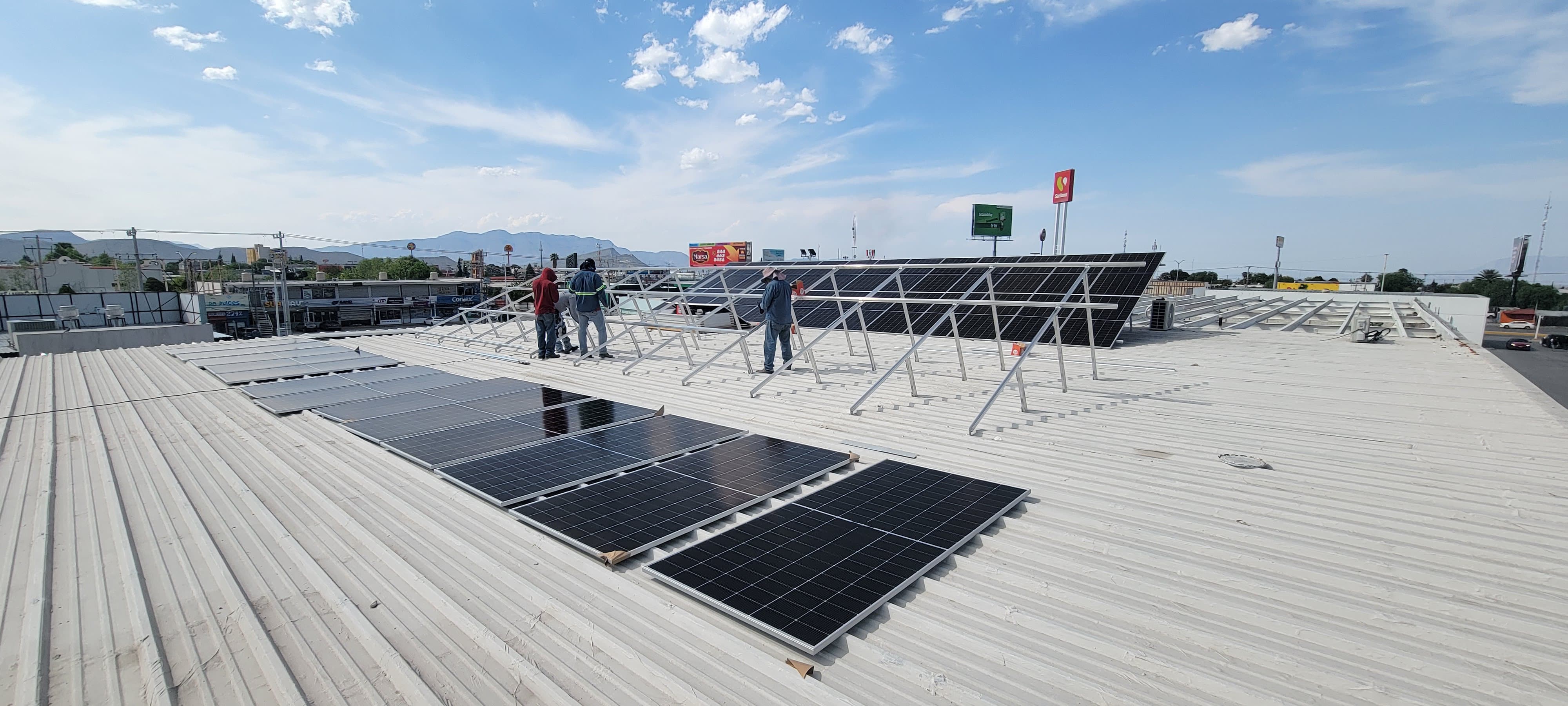
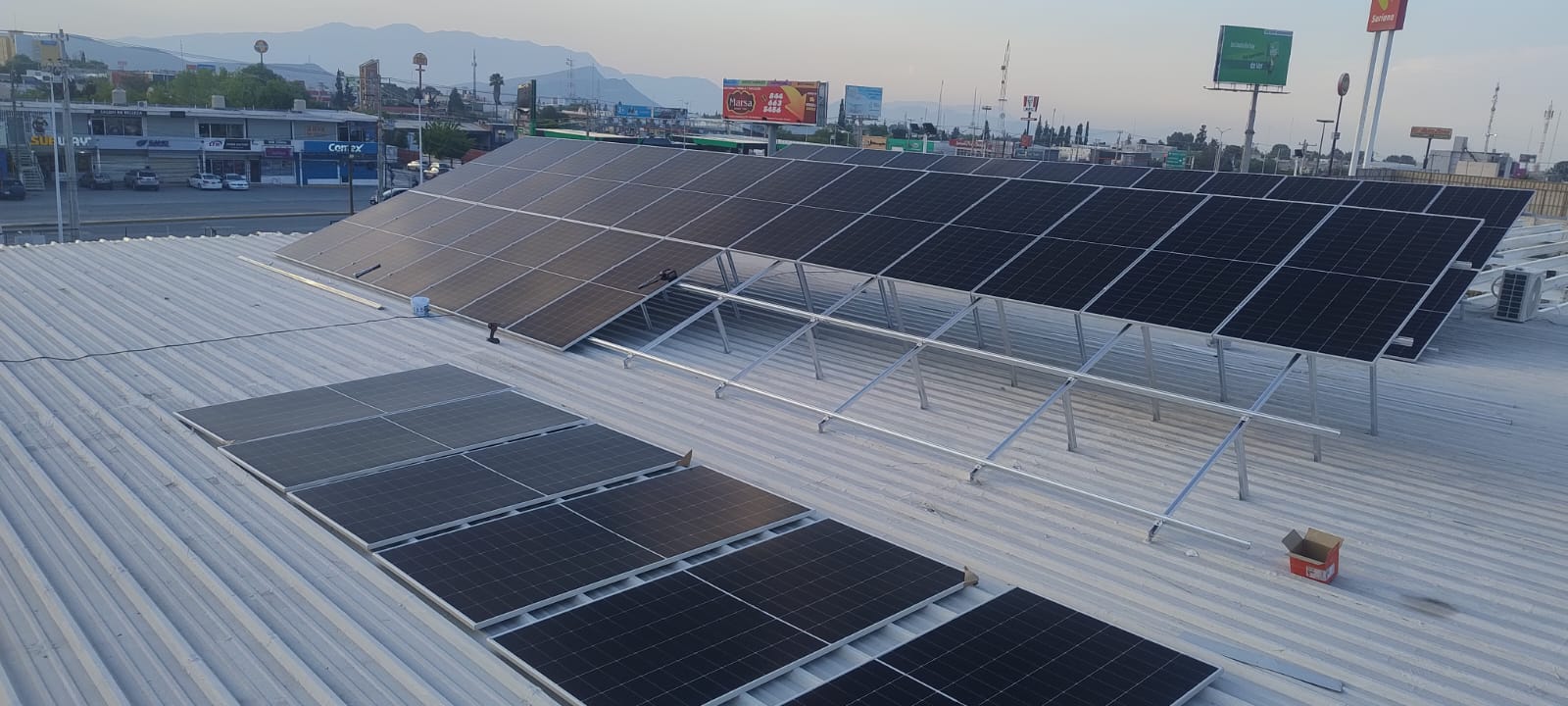
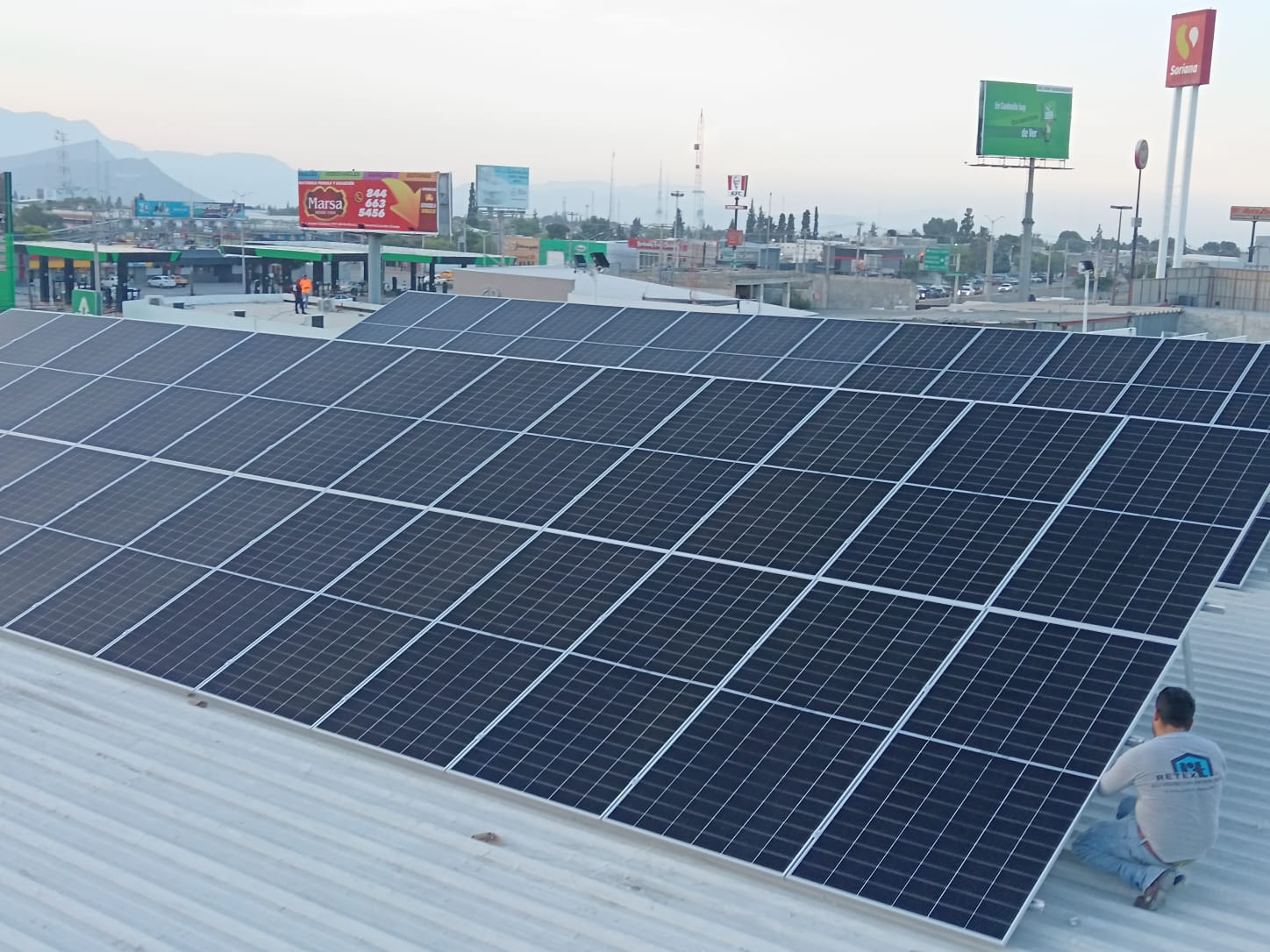
Success story · Commercial PV system · Saltillo, Coahuila
A growing business needed a system sized for its future, not its past. This is the difference between installing panels and doing engineering.
01 — Starting point
Comercializadora Marsa del Norte is a commercial business in Saltillo with a track record of steady growth. Their electricity consumption data showed a clear upward trend: each billing period exceeded the last.
The industry-standard approach — average the last twelve months and size to that figure — would have produced a system that fit the business Marsa del Norte was, but not the business it is becoming. Within months, the system would have fallen short and the power bill would have started climbing again.
02 — The engineering decision
3,599kWh/mo
The number a spreadsheet produces. It ignores the trend and sizes for the past.
4,256kWh/mo
The number trend analysis produces. It anticipates the business's real growth.
Our engineering team analyzed the consumption curve period by period, identified the growth trend, and adjusted the sizing baseline 18% above the simple average. The result: a system that grows with the business instead of falling behind it.
03 — The system
With the adjusted baseline set, the system was sized using Saltillo's actual irradiation data and a conservative efficiency factor. No inflated numbers — we'd rather the system beat the projection than fall short of it.
| Configuration | 52 Canadian Solar panels · 620 W each |
| Total capacity | 32.24 kWp |
| Design irradiation | 5.5 peak sun hours (Saltillo average) |
| System efficiency | 80% (conservative estimate) |
| Estimated monthly generation | ≈ 4,250 kWh |
| Projected consumption coverage | ≈ 100% of the adjusted baseline |
| Modality | Interconnection with CFE, the national utility · Distributed generation |
Estimated generation is calculated using the area's historical average irradiation and an 80% system efficiency factor. Actual production varies month to month with weather and operating conditions. At ProEnergy, savings projections never exceed the client's estimated actual electricity cost.
04 — Why we work this way
Anyone can average twelve bills. Our work starts where the formula breaks down: consumption trends, early-stage businesses, anomalous utility readings. Every system is sized with documented engineering judgment.
ProEnergy was founded in Baja California Sur and today also operates in Saltillo and the southeastern Coahuila region. Our portfolio includes industrial systems, commercial installations, and medium- and low-voltage electrical construction — with CFE among our direct clients.
We don't inflate ROI figures to close a deal. We'd rather give a conservative number that holds than an impressive one that doesn't. That's the difference between closing a sale and building a relationship.
05 — What the meter measured
The figures in section 03 are engineering projections, and they're labeled as such. These aren't: they come from the first billing period with the system in operation, 7 July to 4 September 2026.
| Billed for the period, same two months a year earlier | $38,665 MXN |
| Billed for the period, with the system running | $792.81 MXN |
| Net energy drawn from the grid, 59 days | 170 kWh — against 8,600 kWh a year earlier |
| Energy exported to the grid in the period | 1,617 kWh |
The 1,617 kWh exported are the measured surplus, not the generation: the system produced at least that, plus everything the business consumed directly and that therefore never crossed the meter.
And the figure is still conservative. Some days in this billing period were supplied entirely by the grid, before the system was fully operational. The first complete period is the one that sets the real number — and we'd rather publish this one, asterisk in plain sight, than wait for the best one.
Send us your utility bill. Our engineering team analyzes your consumption curve and presents a proposal sized for your reality — no obligation.
Start a WhatsApp conversation